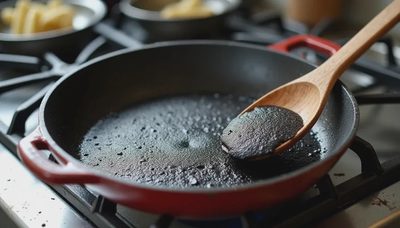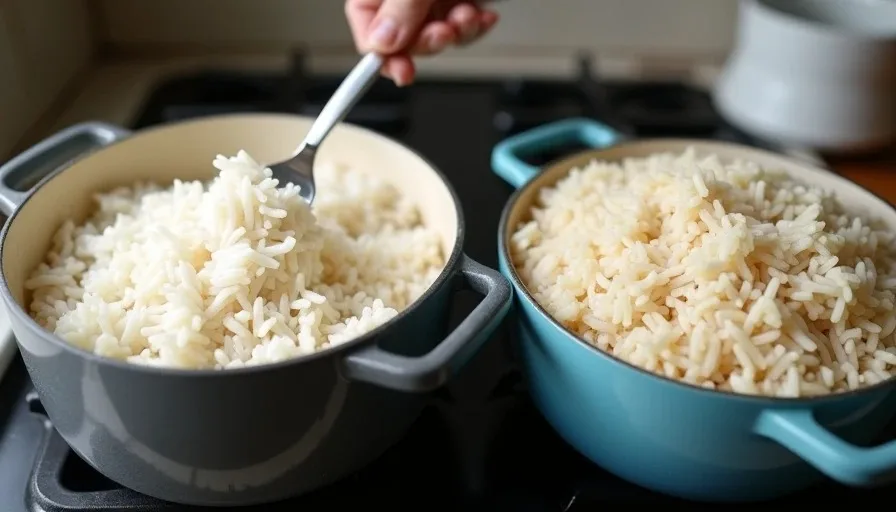
Mushy rice is one of the most common beginner complaints, and it’s almost never because you need special equipment. It’s usually too much water, too much heat at the wrong time, stirring when you shouldn’t, or skipping the rest at the end. Fix those and regular long-grain white rice cooks properly in a basic pot on a regular burner or hot plate.
I’ve coached a lot of people through this. The method below is the one that finally stopped the mush for most of them.
The Core Method That Works Without a Rice Cooker
Use a pot with a tight-fitting lid. If your lid is loose, a piece of foil under it helps.
Ratio
For most long-grain white rice: 1 cup rice to 1¾ cups water.
Some bags and some pots do better with 1:1.5 or 1:2. Start with 1:1¾ and adjust next time based on results. Brown rice needs more water and more time — don’t use the white-rice ratio for it.
Rinse
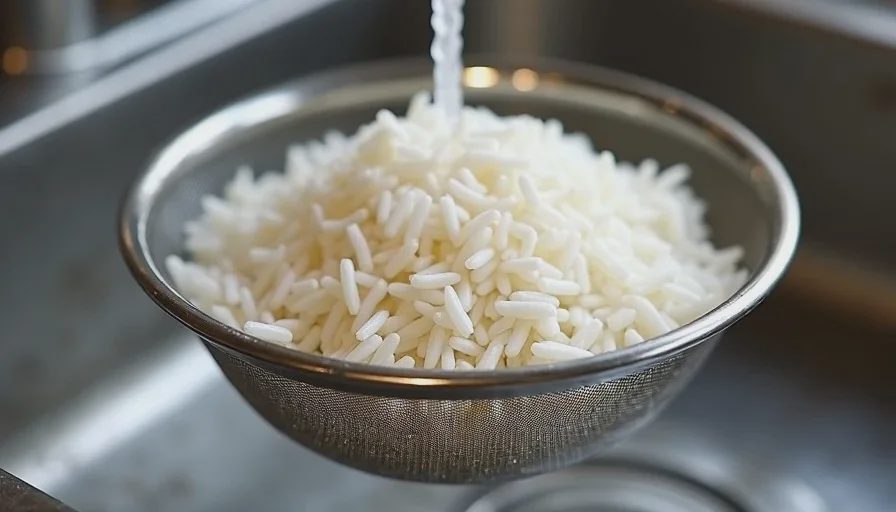
Put the rice in a fine strainer or the pot and rinse under cold water, swishing with your hand, until the water runs mostly clear. This removes surface starch that makes the grains stick together and turn gummy. You don’t have to rinse forever — just until it’s no longer milky.
Cook
Combine rinsed rice and measured water in the pot. Add a pinch of salt if you want. Bring it to a hard boil uncovered over medium-high heat. Once it’s boiling and the surface is bubbling, give it one gentle stir to make sure nothing is stuck, then cover, drop the heat to the lowest setting that still maintains a faint simmer, and leave it alone.
Set a timer for 15–18 minutes for white rice. Do not lift the lid. Do not stir.
Rest
When the timer goes off, turn the heat off completely. Leave the lid on and let it sit for 10 minutes. This step is not optional. The residual steam finishes the cooking evenly and lets the moisture redistribute so the bottom isn’t wet while the top is underdone.
Fluff
After the rest, open the lid, fluff with a fork, and taste. If it’s still a little wet on the bottom, leave the lid off for a couple of minutes so excess steam can escape.
That’s the whole process.
Why It Turns to Mush (The Usual Culprits)
Too much water
The most common cause. Extra water has nowhere to go except into the grains until they burst and release more starch. Measure both rice and water. Don’t eyeball it.
Stirring during cooking
Stirring breaks grains and releases starch. It also lets steam escape so the temperature and moisture level change. After the initial boil, hands off.
Heat too high after covering
If the burner is still cranking, the bottom scorches or the water boils too hard and the texture turns uneven. Lowest simmer possible once it’s covered.
No rest
Pulling the lid off and serving immediately traps uneven moisture. The rest equalizes it.
Wrong rice or old rice
Some cheap rice is broken-grain heavy and turns soft faster. Very old rice can also behave differently. If you’ve nailed the method and it’s still wrong, try a different bag of regular long-grain.
Lid that doesn’t seal
Steam escapes, you compensate by adding more water next time, and the cycle continues. Foil under a loose lid is a cheap fix.
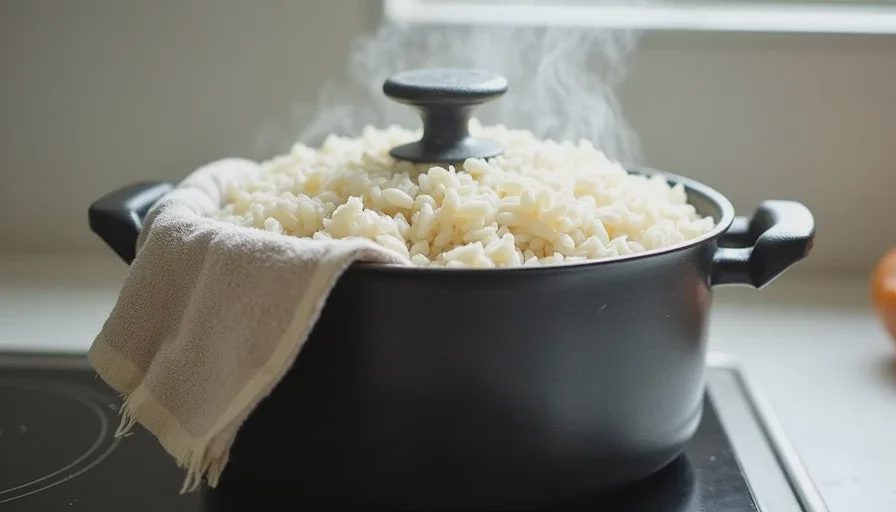
What to Do If It’s Already Mushy
You can’t turn mush back into separate grains, but you can still eat it.
Spread it on a sheet pan and put it in a low oven or under a fan for a bit to dry the surface, then use it for fried rice the next day.
Season it well and treat it as a soft rice bowl or porridge base.
Mix with an egg and vegetables and pan-fry it into a rough rice cake or hash.
In the worst case, it becomes the base for rice pudding if you have milk and a little sugar.
Next batch, reduce the water by a couple tablespoons and commit to the no-stir, low-heat, covered rest method.
Small Variables Worth Knowing
Altitude, pot material, and exact burner strength change things slightly. If your rice is consistently wet, drop the water a little. If the bottom burns before the top is done, your heat is still too high or the pot is too thin. A heavier pot is more forgiving but not required.
Some people swear by the “pasta method” (boil in lots of water and drain). It works and gives separate grains, but you lose the starch that helps flavor stick and it’s easy to overcook. The absorption method above is more standard for a reason.
You do not need a rice cooker. Plenty of people make excellent rice every day with a $15 pot and a lid. The cooker just automates the timing and heat drop. Once you understand the stages, the manual version is reliable.
Try the method exactly once — measured water, rinse, boil, cover, low heat, no touching, full rest — and see what happens. Most people who say “my rice is always mush” are making one of the mistakes above without realizing it.
What’s your current method, and where do you think it’s going wrong? Water amount, stirring, heat, or something else? Detail helps narrow it down.