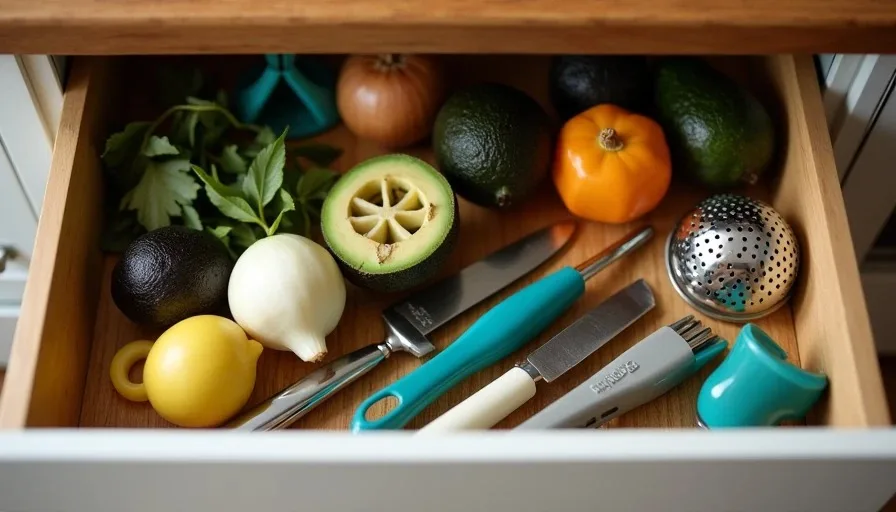
People love telling new cooks what they “must” buy. Half the internet is full of lists that make it sound like you can’t boil water without a $40 spiralizer and a dedicated egg poacher. Most of that advice comes from people who have full kitchens, disposable income, and drawers already full of stuff they rarely touch.
Here’s the hot take for anyone cooking on a real budget with limited space and one or two pans: you can ignore about 90% of the gadgets people push. They don’t make the food better. They just take money that could have bought another pack of chicken or a bag of rice, and they create clutter that makes cooking feel harder.
I’ve cleaned out enough starter kitchens to know which tools sit unused after the first month. Below is the honest breakdown.
The Single-Use Gadgets That Almost Always Fail
These are the ones designed for one narrow job. They look clever in the store and feel smart for about three uses. Then they live in the back of the drawer.
Garlic press
It smashes garlic into a paste and leaves half of it stuck in the holes. Cleaning it is more work than just smashing a clove with the side of your knife and mincing it. A press also squeezes out more of the harsh compounds, so the flavor can taste sharper and less clean. Knife and cutting board do the same job better and clean in five seconds.
Avocado slicer / pitter
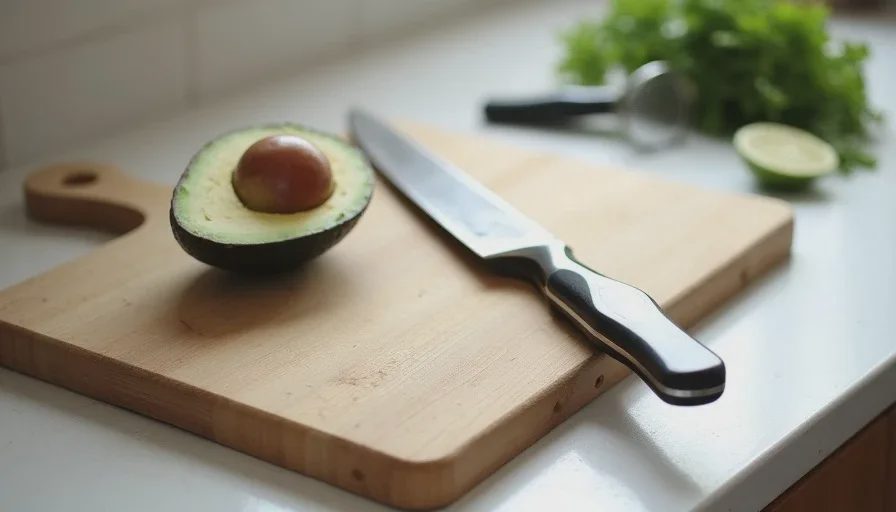
You already own a knife and a spoon. Cut the avocado in half, twist, pop the pit with the knife tip or a spoon, then scoop. The plastic slicer often squishes soft avocados and is useless on firmer ones. Money better spent on actual avocados when they’re on sale.
Banana slicer, strawberry huller, egg slicer, etc.
Anything that only works on one specific fruit or vegetable is almost always a waste. A knife handles all of them. The banana slicer especially is a running joke for a reason.
Onion holder / chopping claw
These metal spikes that hold an onion while you slice look dramatic and solve a problem that doesn’t really exist. Cut the onion in half so it sits flat. That’s it. The holder takes up space and is awkward to clean.
Herb scissors and similar multi-blade tools
They claim to make chopping herbs faster. In practice they bruise the leaves, are hard to clean between the blades, and still require you to wash a special tool. A sharp knife and a quick rocking motion does the same thing without the extra plastic.
These tools share the same problem: they solve a 10-second task by adding a 30-second cleaning step and permanent drawer real estate.
Tools That Sound Useful but Mostly Get in the Way
Some gadgets aren’t pure single-use, but for a beginner on a tight budget they still don’t earn their keep.
Mandoline (especially the cheap ones)
Pros use them carefully for perfect slices. Beginners slice fingertips. The cheap versions clog easily, are a pain to clean, and encourage people to skip learning basic knife skills. A decent knife and a little practice give you more control and zero risk of the “I need a bandage” outcome. If you eventually want one, wait until you’re cooking enough volume to justify it and buy a good one with a hand guard.
Vegetable spiralizer
Fun for about two weeks of “zoodles.” Then it sits there while you go back to regular pasta or rice because spiralizing takes time and the results don’t always hold up in sauces. A knife or even a cheap peeler can make ribbons if you really want them.
Unitasker appliances
Mini waffle makers, single-serve egg cookers, dedicated quesadilla presses, and the like. They work, but each one only does one thing and takes counter or cabinet space. A regular pan or skillet already handles eggs, quesadillas, and most of the rest. On a hot-plate setup you especially don’t need more electric single-job devices.
Fancy oil sprayers and misters
A $3 bottle with a pour spout or even a spoon works fine. The sprayers clog with thicker oils and need constant cleaning. Not worth it when you’re measuring oil by the teaspoon anyway.
What Actually Matters Instead
You need far less than the marketing claims.
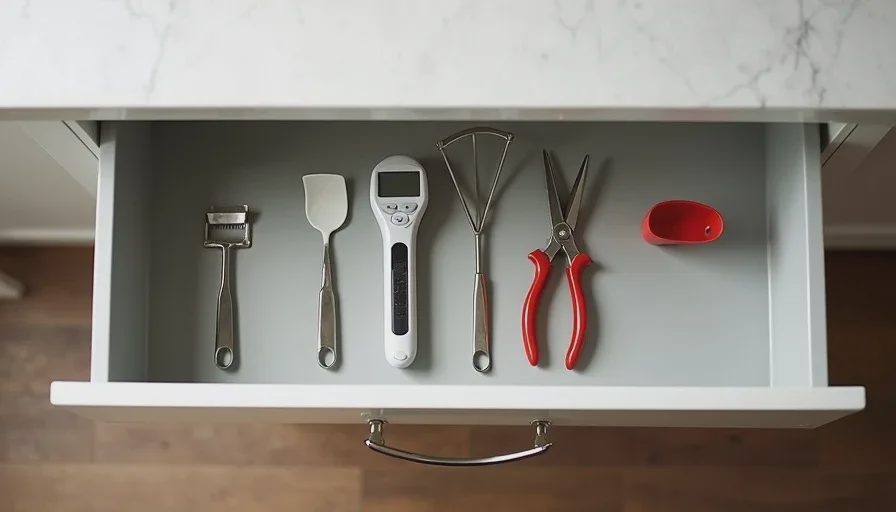
A sharp knife (even a $15–20 basic chef’s knife) and a stable cutting board handle 90% of prep.
A digital instant-read thermometer keeps you from undercooking or overcooking protein.
One good spatula and a simple peeler cover most of the rest.
A pair of kitchen shears is useful for chicken and packaging.
That’s enough to cook solid meals for months. Everything else is optional and should only be added when you notice a repeated problem that a basic tool can’t solve.
The real cost of the gadget pile isn’t just the money. It’s the mental load. Opening a drawer full of half-used plastic tools makes cooking feel like a project instead of just making dinner. A nearly empty drawer with three or four tools that actually work feels lighter.
I’ve watched people spend $40–60 on “starter gadget sets” and still struggle with the same basic skills. The skills matter more than the tools. A sharp knife and the willingness to practice with it will outlast every avocado slicer ever sold.
What’s the most useless kitchen tool you’ve ever bought or been gifted? Be honest — the drawer of shame is real and we’ve all contributed to it.