I’ve watched more new cooks throw away good food or get sick from undercooked chicken than I can count. Most of them already owned a knife, a pan, and some random spatula. What they didn’t have was a way to know when the food was actually done.
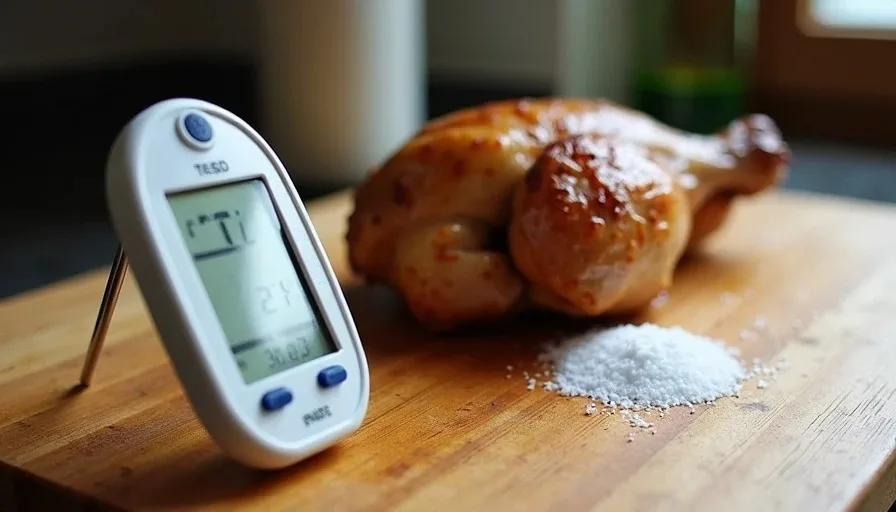
If I had to pick one tool under $15 for someone starting from almost nothing, it’s a basic digital instant-read thermometer. Not the $60 Thermapen. Just a no-name or ThermoPro-style model that reads in a few seconds and costs $10–13 at Walmart, Amazon, or Target. That one tool does more to keep you fed, safe, and under budget than almost anything else you can buy at that price.
Why a Thermometer Beats Almost Every Other “Essential” Tool
A dull knife slows you down. A bad spatula makes eggs stick. Neither of those puts you in the hospital or forces you to toss a whole pack of chicken you already paid for.
Chicken, ground meat, leftovers, and reheated rice all have temperatures where the bad bacteria die. Guessing by color or “it looks done” fails more often than people admit. Bone-in thighs can look browned on the outside while the center is still under 165°F. Ground meat can brown while still unsafe. Rice left out too long grows stuff you can’t see.
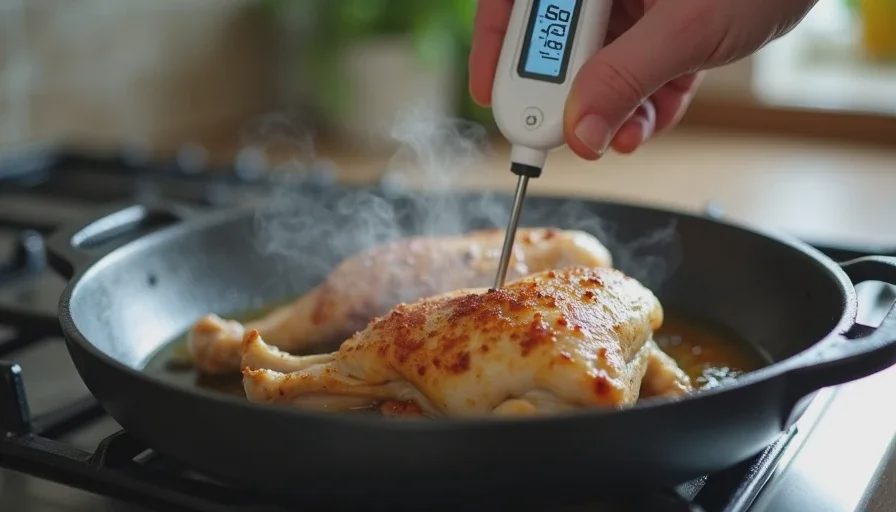
An instant-read thermometer removes the guesswork. Stick the probe in the thickest part, avoid the bone, wait three or four seconds, and you know. That certainty means you stop pulling food early “just in case” and then getting sick, or cooking it to death and ending up with dry, sad meat you don’t want to eat. Dry chicken gets thrown out. Thrown-out food is money gone.
It also teaches you faster. After a couple weeks you start recognizing what 160°F chicken feels like when you press it, or how the juices look. The thermometer is the training wheels. Once you have the muscle memory you use it less, but you still keep it for the times you’re tired or cooking something new.
I’ve used the same $12 thermometer for years. Battery lasts forever if you turn it off. Probe cleans with hot soapy water or a quick wipe. No special care required.
How to Use It Without Overthinking
Pull the probe out of its sleeve. Turn it on. Insert the tip into the center of the thickest part of the meat, not touching bone or the pan. For chicken thighs or leg quarters, go in from the side. For a whole piece or a burger, straight down into the middle. Wait until the number stops climbing. For poultry and leftovers you’re aiming for 165°F. Ground meat the same. Pork can go a little lower if you like it pinker, but stick to the higher number when you’re starting out.
Check more than one spot if the piece is uneven. If it’s under, keep cooking and check again in a couple minutes. Don’t leave the probe in the pan while it cooks on a hot plate — these cheap ones aren’t designed for that. Instant-read means you check, pull it out, and decide.
For reheating leftovers, 165°F again. Same for anything that sat in the fridge a few days. This single habit cuts the risk of the classic “I left the rice out and now my stomach hates me” problem.
What I’d Buy Instead If the Thermometer Was Already Covered
If you somehow already have a working thermometer, the next under-$15 tools that actually earn their keep are simpler.
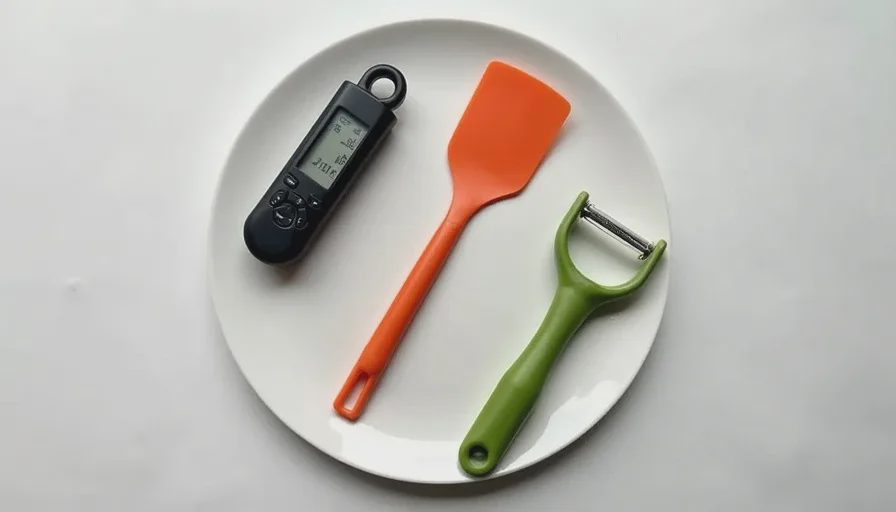
A decent vegetable peeler ($5–8). The swivel kind with a comfortable grip. Peeling potatoes, carrots, or the tough outer leaves of cabbage is faster and safer than fighting with a knife. Less waste, less frustration.
A flexible silicone spatula ($6–10). One that can scrape the last bit of egg or sauce out of the pan and also flip without tearing everything. The cheap ones from the grocery aisle work fine as long as they don’t melt on medium heat.
A $5 pair of kitchen shears if you cook a lot of chicken. Cutting through joints or opening packages without wrecking your only knife is worth it.
Notice what’s not on the list: garlic presses, avocado slicers, single-use gadgets, or anything that claims it will “change your cooking forever.” Those sit in drawers. A thermometer gets used every time you cook protein until you stop needing it as much.
The Real Cost of Skipping It
I used to tell people just to buy a better knife first. Knives matter. A sharp $15–20 knife from a restaurant supply store or a solid Mercer-style blade is excellent. But a dull knife still lets you eat. An undercooked chicken dinner can take you out for two days and cost more in lost work or medicine than the thermometer ever would.
Same with the “just cut it open and look” method. Every time you slice into the chicken to check, juices run out and the meat dries. Thermometer keeps the juices inside.
On a $35 weekly budget, wasting one pack of chicken because you weren’t sure it was done is a real hit. The thermometer pays for itself the first time it saves a meal.
Buy the cheapest one that has decent reviews and a clear display. Test it in boiling water when you get it — it should read close to 212°F at sea level. If it’s way off, return it. Most of the $10–13 ones are accurate enough for home use.
You don’t need the fanciest model. You need the one that sits in the drawer and gets grabbed without thinking. That’s the tool that actually changes how a beginner cooks.
What’s the first tool you bought when you started, and did it actually help or just collect dust?