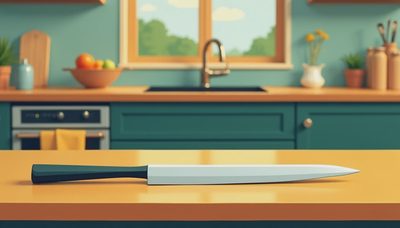
If you cook at home, a must-have knife is a chef's knife, usually between 8 and 10 inches long. You can use it to chop onions, slice carrots, cut chicken, mince garlic, and break down a head of cabbage. You do not need a drawer full of specialty blades or a $150 Japanese knife to make decent food. You need one comfortable knife that is sharp enough to cut cleanly and sturdy enough for ordinary groceries.
My first useful knife came from a discount kitchen aisle and cost about $12. It was not beautiful. The handle got slippery when wet, and the cardboard packaging looked like it had survived a flood. Still, it made meal prep faster than the tiny serrated knife I had been using for everything. That single change made rice bowls, soup, pasta sauce, and sheet-pan dinners feel less like chores.
What makes a knife a must-have knife?
The best all-purpose choice is a chef's knife with a broad, slightly curved blade. The curve lets you rock the knife through herbs and vegetables, while the wide side gives your knuckles room to clear the cutting board. Look for a full-sized handle that feels secure without forcing your fingers into a tight grip. If you have small hands, an 8-inch blade is often easier to control than a 10-inch model.
A must-have knife should also have a reasonably thick spine and a blade that does not flex dramatically when you press it against a carrot. Flex is useful for a fillet knife, but it is annoying for everyday chopping. The edge should meet the handle smoothly, without sharp metal corners that rub your fingers. Hold the handle in a store if you can. Online reviews help, but your hand gets the final vote.
For a budget kitchen, reasonable options include the Victorinox Fibrox 8-Inch Chef's Knife, often priced around $35 to $45, and the Mercer Culinary Millennia 8-Inch Chef's Knife, frequently found around $20 to $30. A basic Farberware or grocery-store chef's knife can work for $10 to $18 if the handle feels safe and the blade is straight. Price it out, then tell me it doesn't work.
Do you need a paring knife, bread knife, or cleaver?
Eventually, you might want a small paring knife for peeling apples, trimming strawberries, or removing the stem from a tomato. It is useful, but it is not the first purchase. A $5 to $10 paring knife can wait until your cooking routine shows you that you need one. I used my chef's knife for small tasks for months before buying a separate blade.
A serrated bread knife earns its place if you buy sandwich bread, crusty loaves, bagels, or ripe tomatoes. The teeth grip soft food without crushing it. You can often find a serviceable one for $12 to $20. A cleaver is unnecessary for most beginner kitchens. Do not use a standard chef's knife to chop through bones, frozen food, or hard squash with force. That is how an inexpensive tool becomes a broken tool and a hand injury becomes an expensive problem.
The must-have knife earns its name because it handles the widest range of low-cost meals. It can turn a $1 onion, a can of beans, and a few carrots into soup for several servings. It can slice a $3 package of chicken thighs before they go into a skillet. One tool doing five jobs is a better deal than five tools doing one job each.
How much should you spend?
For most new cooks, the sweet spot is $15 to $45. Under $10, quality becomes inconsistent, although a sale can produce a perfectly usable blade. Above $50, you are usually paying for better materials, balance, finish, or a brand's manufacturing standards. Those improvements can be real, but they do not automatically make your food taste better.
My must-have knife recommendation for someone watching every grocery dollar is the Mercer Millennia if it feels comfortable in your hand. At roughly $25, it leaves money for a cutting board, dish soap, and actual groceries. If you can spend more, the Victorinox Fibrox is a dependable upgrade without drifting into luxury pricing. Neither choice requires babying, but both should be washed by hand and dried promptly.
Do not buy a knife set just because the block looks complete. A $40 set may contain eight pieces, but several could be tiny steak knives or tools you rarely touch. That money could buy one better chef's knife and a stable plastic cutting board. A board that costs $10 to $20 and does not slide around is part of the safety equipment, not an optional decoration.

How to use and maintain it safely
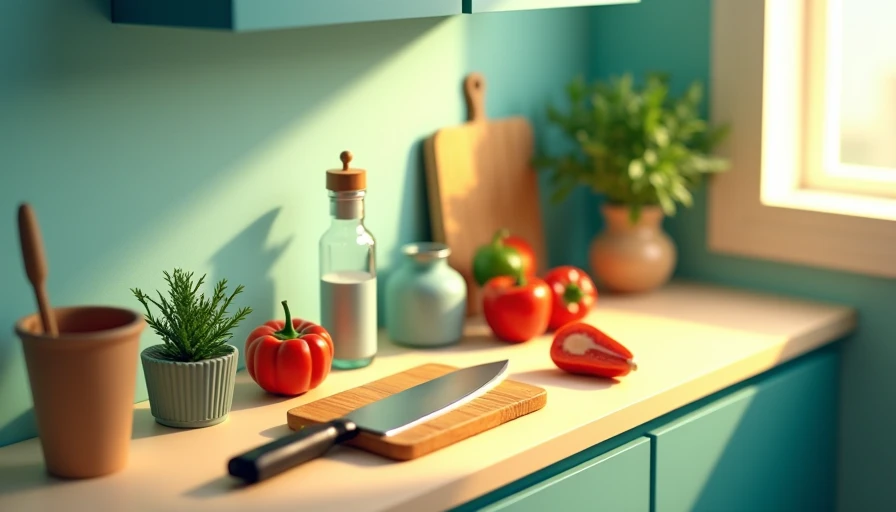
A sharp must-have knife is safer than a dull one because it is less likely to skid off a vegetable. Keep the cutting board on a damp kitchen towel so it stays still. Curl the fingertips of your guiding hand backward, using your knuckles as a fence. Move slowly until the motion feels automatic. Speed comes later, and dinner does not care whether you diced an onion in twelve seconds or forty.
Wash the blade with warm water and dish soap, then dry it immediately. Do not leave it soaking in a sink where someone can reach into cloudy water. Do not put a quality chef's knife in the dishwasher; the heat, detergent, and rattling can damage the edge and handle. Store it in a knife guard, a block, or a secure drawer insert rather than loose beside forks.
When the knife starts sliding instead of cutting, use a honing rod a few times on each side to realign the edge. Honing is not the same as sharpening. After several months of regular cooking, a basic pull-through sharpener or a local sharpening service can restore the edge. Replace the knife if the handle cracks, the blade develops a dangerous bend, or the metal no longer sits firmly in the handle.
The budget test: what will it actually cook?
Take a must-have knife into a normal week, not a fantasy cooking project. On Sunday, chop an onion and two carrots for lentil soup. On Monday, slice bell pepper for eggs. On Tuesday, cut potatoes into even pieces for roasting. On Wednesday, mince garlic for noodles. If the knife handles those jobs without wrist strain or repeated sawing, it is doing its work.
A $25 knife used four times a week for two years costs about six cents per use before sharpening. Compare that with buying pre-cut vegetables at an extra $1 to $3 per package. You may not save every week, and sometimes convenience is worth paying for, but regular chopping can stretch a grocery budget quickly. The point is not to become a professional cook. It is to make basic ingredients easier to use.
The right must-have knife will not fix every cooking problem. It will not rescue burned rice or make a bad recipe good. It can remove one frustrating barrier between you and dinner, though, and that matters when you are tired and trying to spend less. Start with a comfortable chef's knife, a stable board, and a few ordinary vegetables. That is enough equipment to begin cooking real meals.