If you are trying to find the best non-stick pan without spending half your grocery budget, start with a 10-inch skillet from a dependable brand. For most beginner cooks, my practical pick is the Tramontina Professional Restaurant Fry Pan in the 10-inch size. It often sells for roughly $25 to $35, has a comfortable handle, and releases eggs, pancakes, and reheated rice without requiring a puddle of oil.
That recommendation is not about having the fanciest kitchen. I cooked for years with one small pan, a dented saucepan, and a spatula that was too wide for both. A good nonstick skillet helped me make cheap food with fewer stuck-on disasters. The best non-stick pan should save ingredients, time, and frustration. It does not need to look impressive hanging above your stove.
My budget pick and what you actually get
The Tramontina Professional 10-inch pan is the best non-stick pan for a small apartment kitchen because it handles the jobs people cook most often. Two eggs fit comfortably, a grilled cheese sandwich browns evenly, and a pound of ground turkey has enough room to cook without steaming immediately. The sloped sides also make it easier to slide food onto a plate.
Prices move around, but $25 to $35 is a fair target at major online retailers or restaurant-supply stores. If you see the pan closer to $20, that is a strong buy. If it is $50 or more, compare it with other options before paying the premium. A pan is a tool, not a personality test.
The OXO Good Grips Non-Stick Pro 10-inch skillet is another solid choice, usually closer to $45 to $60. Its handle feels substantial, and the pan is comfortable for someone who cooks several times a week. The price difference can make sense if you want a heavier pan and expect to use it regularly. For a first apartment or tight grocery month, though, the Tramontina leaves more money for eggs, beans, and vegetables.

What to look for before you buy
The best non-stick pan has a coating that looks even from edge to edge, a base that sits flat, and a handle that does not wobble. A 10-inch size is the sweet spot for one to three people. An 8-inch pan is useful for one egg or a grilled sandwich, but it gets crowded quickly. A 12-inch skillet is better for family portions, though it can be awkward on a small burner and harder to store.
Check whether the pan works on your stovetop. Many inexpensive nonstick pans are designed for gas or standard electric burners and do not heat properly on induction. If you have an induction range, look for an induction-compatible base in the product description. Do not assume a heavy-looking bottom guarantees compatibility.
Oven ratings matter too. Some pans can handle a low or moderate oven temperature, while others have handles or coatings that are not designed for oven use. If you want to finish frittatas under the broiler, buy specifically for that purpose. Otherwise, a stovetop skillet is enough for scrambled eggs, quesadillas, hash, and quick chicken dinners.
The care that keeps a cheap pan useful
Even the best non-stick pan will fail early if you attack it with metal tools. Use silicone, wood, or plastic utensils. A metal fork can scratch the surface while you are moving an egg, and once the coating starts peeling or flaking, it is time to replace the pan.
Wash the skillet by hand with warm water, dish soap, and a soft sponge. Many pans are labeled dishwasher-safe, but repeated dishwasher cycles can shorten the useful life of the coating and dull the exterior. Never pour cold water into a screaming-hot pan. Let it cool first, then wash it.
You also do not need high heat. Medium or medium-low is enough for eggs, pancakes, and most sandwiches. Preheat for a short time, add a teaspoon of oil or butter when needed, and keep cooking. Empty heating is harder on the coating than cooking food in the pan.
I replace a $30 skillet every few years rather than treating it like a lifetime heirloom. That is still about $10 per year before considering the meals it helps make. The best non-stick pan is valuable because it earns its space through repeated use, not because a label promises it will last forever.
Cheap meals that prove the pan is worth it
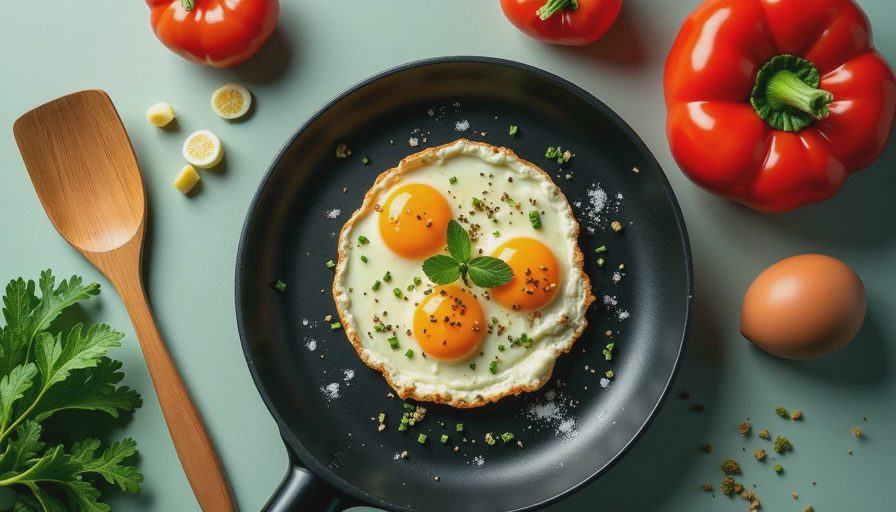
Start with eggs. A dozen store-brand large eggs can cost around $3 to $5 depending on the store and sale, so two eggs might run roughly 50 to 85 cents. Add toast and a banana, and you have breakfast for about $1.25 to $1.75. In a good skillet, the eggs release cleanly instead of leaving half the breakfast glued to the bottom.
For lunch, make a potato and egg hash. Dice one medium potato, microwave it with a splash of water until partly tender, then crisp it in the pan with a little oil. Add one egg and a spoonful of shredded cheese. A realistic grocery estimate is $1.25 to $2 per serving, especially if you buy cheese in a block and use it across several meals.
A nonstick pan also handles chicken thighs well. Brown one boneless thigh, add frozen vegetables and a little broth, then cover until cooked through. Serve it over rice. At a sale price of $2 to $3 per pound for thighs, the complete plate can land around $2.50 to $3.50, depending on the vegetables and rice. It is not restaurant food, and that is fine. It is dinner that works.
Pans I would skip for a first purchase
I would skip the cheapest unbranded pan with a coating that already looks uneven in the package. Saving $8 is not a win if pancakes stick on the first weekend. I would also skip a tiny 6-inch skillet as your only pan. It may cost $12 to $18, but it cannot comfortably cook a full quesadilla or a pound of leftovers.
At the other extreme, a $100-plus nonstick pan is difficult to justify for a beginner on a grocery budget. Premium construction can feel nice, but it does not turn a $1 can of beans into a different meal. The best non-stick pan for your kitchen is the one you can afford, use safely, and replace without panic when the coating finally wears out.
Be careful with very large sets, too. A three-pan bundle may look like a deal, but you may use the 10-inch skillet constantly and leave the other two in a cabinet. Buy the size that solves tonight’s cooking problem first. You can add a second pan later if your habits prove you need one.
A simple buying decision
If you cook for one or two people, buy a 10-inch Tramontina or a comparable mid-priced skillet and keep the receipt. If you have induction, confirm the base before ordering. If you cook for four people, consider a 12-inch model, but make sure it fits your burner and storage space. If you mostly cook eggs, pancakes, and grilled cheese, prioritize a smooth coating and comfortable handle over an oven rating.
My final best non-stick pan test is boring: Can I cook two eggs, clean it with a soft sponge, and lift it without scraping? Can I afford it after buying groceries? If the answer is yes, you have enough pan to start. Price it out, then tell me it does not work.