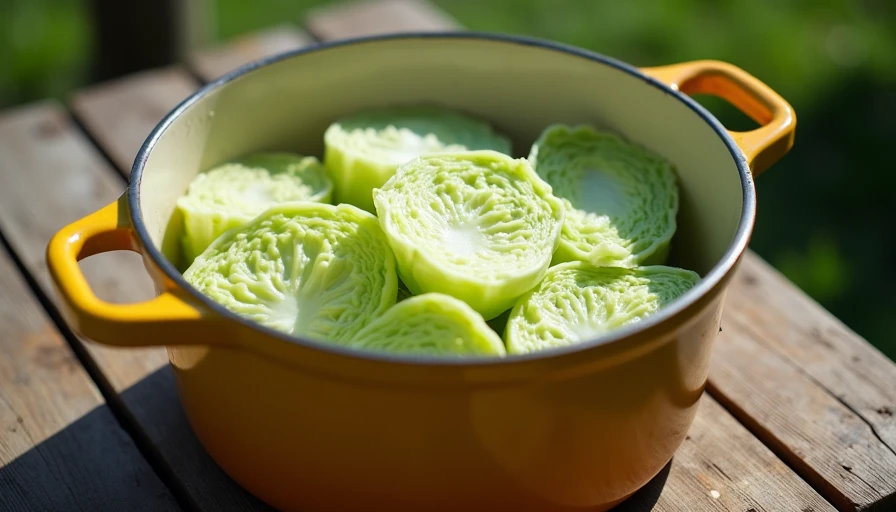
Cabbage boil is one of those meals that looks almost too plain on paper and then saves dinner on a Wednesday when your grocery money is tight. You need cabbage, potatoes, an onion, and something salty, such as smoked sausage or bacon. The pot does most of the work. My basic cabbage boil feeds four for about $1.50 per serving at regular Kroger prices, and less when cabbage or sausage is on sale.
This is not a delicate recipe. It is a large pot of vegetables cooked until tender in seasoned water or broth. You can make it with meat, without meat, or with a leftover ham bone. The important parts are cutting the potatoes evenly, salting the cooking liquid, and not boiling the cabbage into complete mush.
What to buy for a budget cabbage boil
For four generous servings, buy one medium green cabbage, about two pounds of russet potatoes, one yellow onion, eight ounces of smoked sausage, two tablespoons of butter, salt, black pepper, and a teaspoon of garlic powder. A half teaspoon of paprika is nice but not required. If you already have the seasonings, the shopping list is short enough for a quick trip.
Here is my rough Columbus grocery price breakdown: cabbage, $2.49; potatoes, $1.75; onion, about $0.80; smoked sausage, $3.99; and butter, roughly $0.35 for the amount used. That totals about $9.38, or $2.35 per serving. A sale-priced sausage package can bring the total closer to $7.50. If you use canned beans instead of sausage, the price drops another dollar or two and the meal still has enough substance to hold you over.
Choose a cabbage that feels heavy for its size, with tight leaves and no large soft spots. Russet potatoes work because they are inexpensive and become tender without falling apart immediately. Yellow potatoes are also good, but I buy whichever bag has the better price. This is not the place to spend extra money on a specialty variety.
How to make cabbage boil without turning it watery
Start by filling a large pot with about eight cups of water or low-sodium broth. Add the sliced onion, one teaspoon of salt, black pepper, and garlic powder. Put the pot over medium-high heat while you prepare the vegetables. You do not need a rolling boil yet; a steady simmer is easier to control.
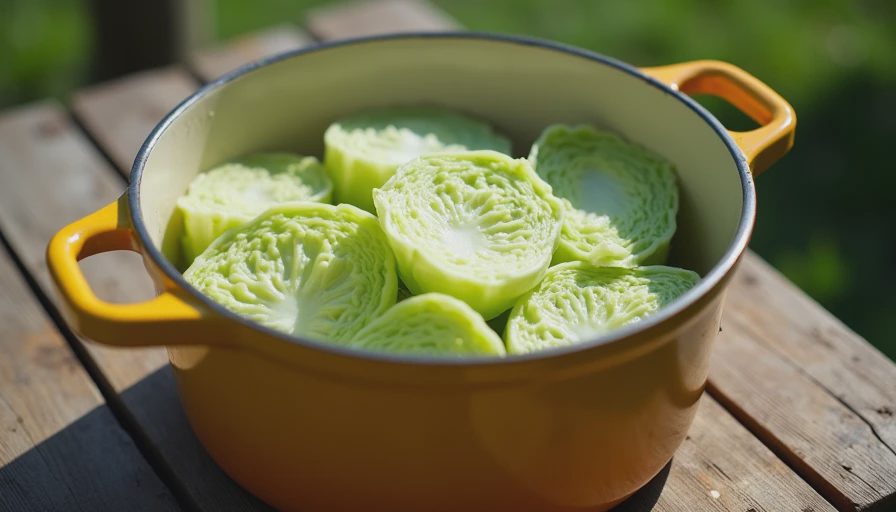
Cut the potatoes into chunks no larger than a golf ball. Slice the sausage into coins. Cut the cabbage into wedges, remove the hard core, and then chop the wedges into pieces about two inches wide. Do not shred it. Thin cabbage disappears quickly and can make the finished dish wet.
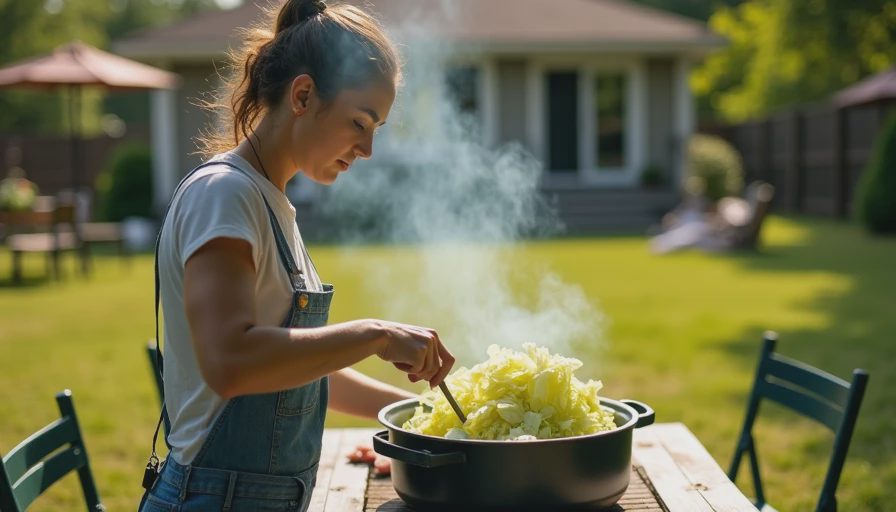
Add the potatoes and sausage to the seasoned liquid first. Cover the pot and simmer for 12 minutes. Then add the cabbage, press it down gently with a spoon, and cover the pot again. Cook for another 10 to 15 minutes, until a fork slides through a potato. Stir once halfway through, but do not keep opening the lid.
Drain most of the liquid, leaving about half a cup in the pot. Add the butter and taste before adding more salt. The sausage brings salt, and broth can bring even more. Let the pot sit uncovered for five minutes. That short rest lets the cabbage soak up flavor instead of tasting like boiled water.
The fixes that make a cabbage boil taste like dinner
The most common problem is blandness. Usually the cook used plain water and did not add enough salt until the end. You can fix that by stirring in butter, black pepper, garlic powder, and a small splash of apple cider vinegar. The vinegar does not make the dish sour; it wakes up the cabbage and cuts through the sausage fat.
If your pot tastes watery, drain more liquid and return it to low heat for a few minutes. If it tastes too salty, add another potato or a can of drained, rinsed beans. Do not add sugar to hide the salt. That gives you a strange sweet-salty pot and does not actually solve the problem.
A cabbage boil can also turn mushy when the pieces are too small or the pot cooks too long. Next time, add cabbage later and use a timer. Tender is the goal. You should still be able to pick up a piece with a fork without it collapsing into strings.
For more flavor without buying a long list of ingredients, brown the sausage in the pot first, then remove it while the vegetables cook. The browned bits left on the bottom season the broth. This adds about five minutes, but it is the best upgrade when you have the time.
Cheap swaps when the refrigerator is nearly empty
There is no single correct version of this cabbage boil. Kielbasa, smoked turkey sausage, hot links, diced ham, or leftover roast pork can all work. Use what is already in your freezer before buying a new protein. Even two strips of bacon, chopped and cooked first, can flavor the entire pot.
For a meatless version, use a can of white beans, a drained can of chickpeas, or a cup of frozen peas. Add the beans during the last five minutes so they warm through without breaking apart. Vegetable broth gives more flavor than water, but a spoonful of bouillon works too. Read the label before salting because bouillon is often quite salty.
You can replace potatoes with sweet potatoes, carrots, or a small amount of rice, though rice changes the texture and absorbs liquid. Frozen chopped cabbage is acceptable when fresh cabbage is expensive. Add it near the end because frozen vegetables soften faster than raw wedges.
If you have mustard, stir a teaspoon into your bowl. Hot sauce, red pepper flakes, or a spoonful of sour cream also works. These are finishing touches, not required purchases. A meal that needs five extra condiments before it tastes good is not a budget win in my kitchen.
Serving, storing, and reheating leftovers
Serve the cabbage boil in shallow bowls with some of the cooking liquid spooned over the top. The liquid is useful because it keeps the potatoes from feeling dry after draining. Crusty bread is good alongside it, but the meal is filling without bread. For four people, plan on about one and a half cups per serving, with extra sausage if you have big appetites.
Cool leftovers within two hours and store them in a covered container in the refrigerator. They should keep well for about three days. Reheat one portion in the microwave with a tablespoon of water, or warm the whole batch in a covered skillet over medium-low heat. The cabbage will be softer the second day, but the flavor usually improves.
I would not freeze the finished pot if texture matters to you. Potatoes can become grainy after freezing, and cabbage gets very soft. If you have too much, freeze the sausage separately and turn the vegetables into soup the next day with broth and canned tomatoes.
A simple cabbage boil plan for a $10 dinner
If I were feeding two adults and trying to stay under $10, I would buy cabbage for $2.49, a small bag of potatoes for $2.50, one onion for less than a dollar, and a sale package of sausage for about $3.50. That comes to roughly $8.50 before pantry staples. The first night gets bowls of sausage and vegetables. The next day, leftovers become soup with a can of tomatoes if one is already in the cupboard.
That is the part I like: the recipe stretches without pretending that plain vegetables are exciting all by themselves. The sausage adds salt and smoke, the potatoes make it filling, and the cabbage gives you a large volume of food for very little money. Price it out, then tell me it does not work.
If you are new to cooking, start with the timer and do not worry about making the pieces beautiful. Cut them safely, taste the broth, and stop cooking when the potatoes are tender. Once you make one cabbage boil, you can adjust the seasoning and swap ingredients based on whatever is cheap that week. That is how a bare-bones recipe becomes a dependable dinner.