Most restaurant pasta isn’t magic. It’s decent noodles, a sauce that actually sticks, enough salt, and the confidence to stop cooking before everything turns to mush. You can get 80% of that feeling at home for a fraction of the price if you stop treating pasta like an afterthought.
This is the version I make when I want it to feel like a treat instead of “just pasta again.” It lands around $2.50–$2.90 per generous serving depending on your store brands and whether you already have oil, garlic, and cheese in the house.
The Exact Ingredients and Cost (2–3 Servings)
8–12 oz dry spaghetti or whatever long pasta is cheapest: $0.60–0.90
1 can (14–15 oz) diced or crushed tomatoes, store brand: $0.80–1.10
3–4 cloves garlic: $0.20
2–3 Tbsp oil or butter (or a mix): $0.25–0.40
Salt, black pepper, red pepper flakes if you have them: negligible
Optional but worth it: ¼–⅓ cup grated Parmesan or the cheap powdered kind in a shaker: $0.40–0.70
Optional: pinch of sugar, dried oregano or basil, splash of the pasta cooking water
Total for the batch: roughly $2.50–3.50.
Per serving (two big plates or three smaller ones): $1.25–1.75 if you’re strict, closer to $2.50–2.75 when you count a realistic portion and the cheese. Still nowhere near restaurant pricing.
The “restaurant” part isn’t the ingredient list. It’s how you put it together.
The Method That Makes It Taste More Expensive
Bring a pot of water to a hard boil and salt it like the ocean. Not a pinch — enough that it tastes noticeably salty. This is the only chance to season the pasta itself. Most home cooks under-salt the water and then wonder why the finished dish tastes flat.
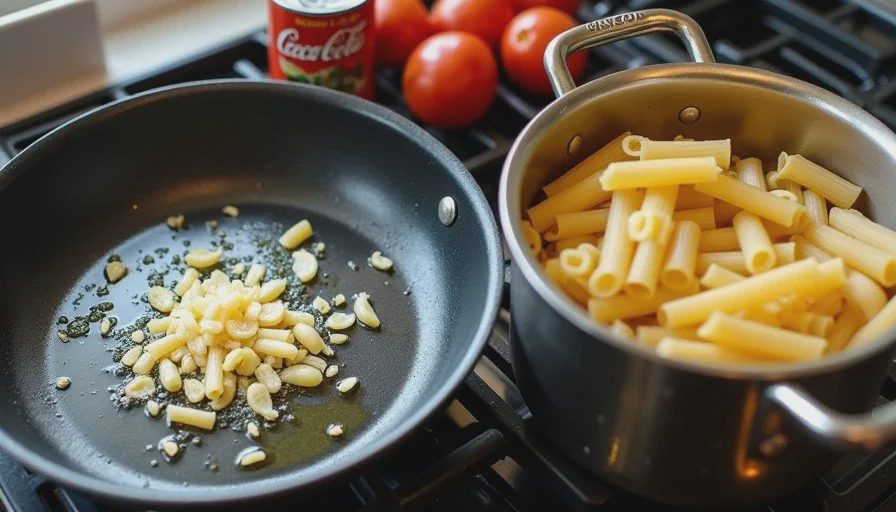
While the water heats, start the sauce. Pour the oil or melt the butter in a wide skillet over medium. Add the sliced or smashed garlic and let it cook gently until it turns light golden and smells good. Don’t let it burn. If you’re using red pepper flakes, add them now so they bloom in the fat.
Dump in the can of tomatoes with their juice. Add a small pinch of salt, a grind of pepper, and a tiny pinch of sugar if the tomatoes taste sharp. Let it simmer and reduce while the pasta cooks. You want it to thicken a little and lose the raw canned taste. Stir once in a while.
Cook the pasta to just under al dente — usually one minute less than the package says. Before you drain, scoop out a mug of the starchy cooking water. That cloudy water is free sauce insurance.
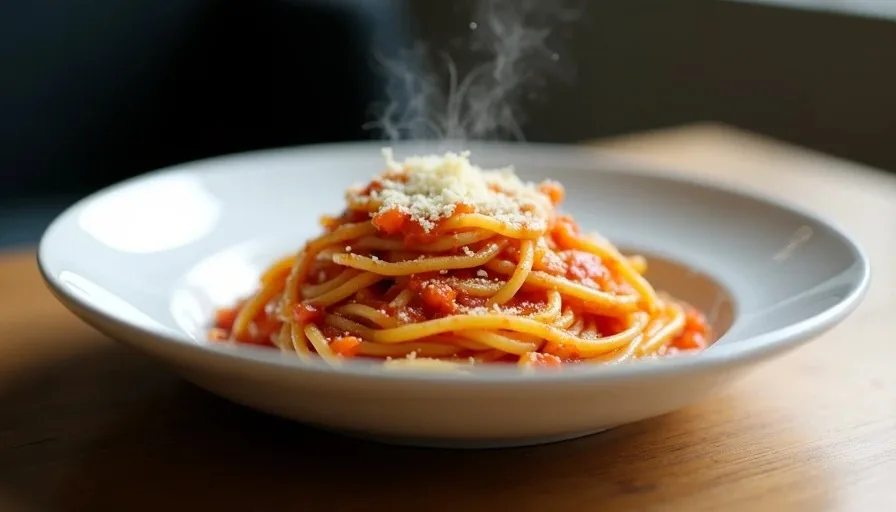
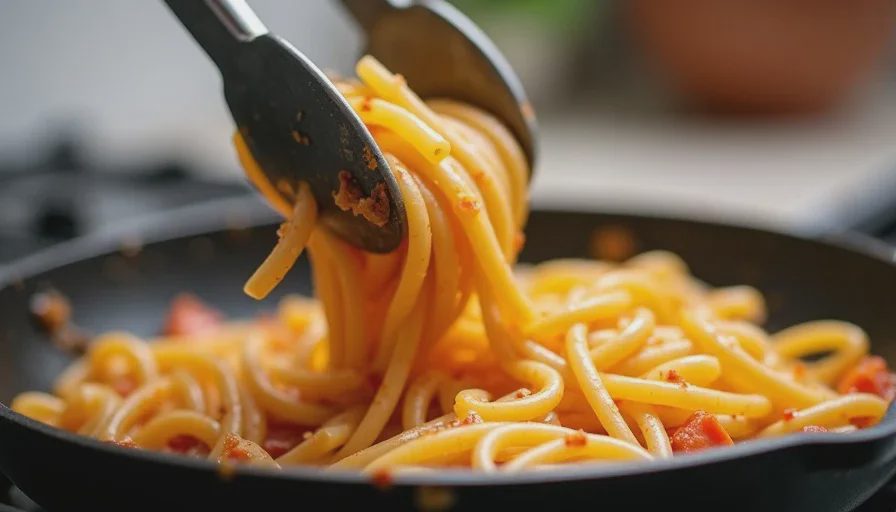
Drain the pasta (don’t rinse) and throw it straight into the skillet with the sauce. Add a splash of the pasta water. Toss hard over medium heat for 1–2 minutes so the sauce emulsifies and clings to every strand. The starch in the water is what makes it glossy and restaurant-like instead of watery and separate.
Turn off the heat. Add most of the cheese if you’re using it and toss again. Taste. More salt? More pepper? Another splash of pasta water if it’s getting tight? Serve immediately with the rest of the cheese on top.
That’s the whole technique. The tossing step is non-negotiable. Dumping sauce on top of naked pasta never tastes as good.
Small Upgrades That Don’t Break the Bank
A little butter stirred in at the end makes it richer.
If you have an anchovy or two, melt one with the garlic. You won’t taste fish — you’ll just get deeper savoriness.
Leftover cooked vegetables or a handful of frozen spinach can go into the sauce in the last few minutes.
A squeeze of lemon or splash of vinegar at the end brightens everything if the tomatoes feel heavy.
What you skip: cream (unnecessary for this style), piles of fresh herbs you won’t use up, and expensive imported pasta when the store brand works fine with good technique.
Why This One Works When Others Taste Cheap
A lot of budget pasta ends up bland because the water wasn’t salty enough, the sauce never reduced, and the pasta and sauce met for the first time on the plate. This method forces them to finish cooking together. The starch binds everything. The garlic gets a chance to perfume the oil. The tomatoes cook long enough to taste intentional.
I’ve made this after long days when takeout was calling. It takes about the same time as waiting for delivery and costs a fraction. Leftovers reheat better if you keep a little extra pasta water to loosen them.
Roast it if you want. Tell me where you’d change the seasoning, swap the pasta shape, or stretch it further. I’m always curious what other people do when they want the $18 feeling without the $18 bill.